



Latest Blogs & Insights
Explore stories, updates and reflections from our community. Our blogs share learning experiences, campus highlights, events and insights to keep parents and students informed and inspired.
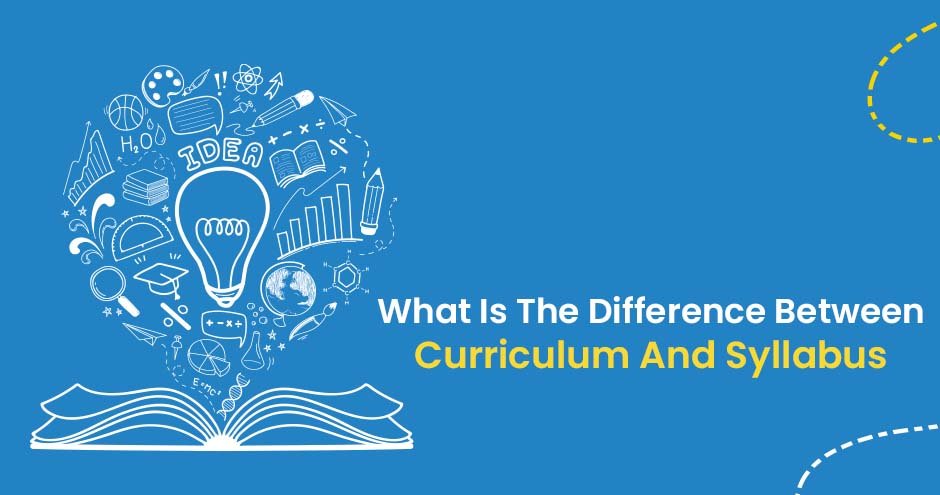
What Is The Difference Between Curriculum And Syllabus?
- Category Blog
- Author Admin
- Published On 30 Jun, 2022
- Keywords Best School in Coimbatore
The duties of an educational institution do not end with textbooks only. A school plays the role of a guide to young minds. So, it has the immense responsibility of showing them a roadmap to the larger world that awaits. Integrating a proper syllabus and curriculum is essential for a child's overall development and growth.
When trying to choose a school for your young ones, a comprehensive understanding of its academic programming outline is important. So, it's better to know what is the difference between curriculum and syllabus.
In simpler terms, a syllabus extensively covers all the minute portions or topics of a subject which will be taught in a class. Alternatively, the curriculum is emblematic of the subjects, topics, actions, activities, etc., which are part of the educational blueprint. So, in other words, a syllabus is a list of topics that your kids will be learning inside the classroom. A curriculum, however, is a set of guidelines about academic discourse and skill development.
What Is A Curriculum?
A curriculum is a standard-based sequence working as an aid for the educators in creating their lesson plans. In broader terms, it refers to the wide array of academic themes and disciplines covered during a specific course. So, aside from the subject topics themselves, a curriculum also highlights the necessity of teaching those topics in the first place.
Consequently, the scope of a curriculum is wider in comparison. This is a prescriptive doctrine in nature which is based on the efficacy metrics of the institution. A curriculum highlights course objectives for the teachers and ensures that the resources are properly used to benefit the young minds.
This guided overall learning programme helps students in their general improvement. During a course, a student has to participate in a series of mental and physical activities as denoted in the curriculum. These generally include assignments, standardised testing or exams. The curriculum of a specific school, for example, underlines when these projects are to be submitted or the exam dates.
At its core, a curriculum is shaped based on evaluating the needs of the students and teachers in an academic environment. It helps formulate an objective and accordingly decide the course of action for an enhanced teaching-learning experience. As a result, an advanced curriculum can renegotiate conventional ideas about education means and measures. It also highlights how an institution can help shape young minds' identities under supervision.
So, a curriculum can offer an intricate structure of study materials, ideal student behaviour, teaching methods and periods, and the syllabus itself. Efficient schools also encourage pupils to take part in extra-curricular activities like sports, recitation or theatre.
What Is A Syllabus?
A syllabus is a crucial component of the curriculum of an educational institution. It is a requisite descriptive document which lists down the different topics of a particular subject and the associated exercises. Naturally, this document is helpful for both students and their educators as a teaching-learning result indicator for a specific academic year.
Generally, a school hands out class and subject-specific syllabus at the beginning of the year. As it contains a list of concepts they will learn that year - occasionally with summaries – it can better prepare these pupils for their classes. On the other hand, teachers too can refer to it as a guideline. They will have a clear idea of how many topics they must go over in the class. So, they can accordingly create their schedules for proper time management.
In a broader sense, a syllabus offers a holistic view of the fundamentals of a course. Schools with advanced academic programming ensure to blend practical and theoretical knowledge-based learning when following these directives. It helps students better interpret the comprehensive overview of what they're expected to achieve in an academic year. So, they will know how many topics they need to prepare before an evaluation and manage their time accordingly.
Alternatively, the educators can also refer to the syllabus to assess their students' performance. It will give them an in-depth idea about the issues and topics a student might be struggling with. Accordingly, they can offer adequate help to their pupils.
What Are The Key Differences Between Curriculum And Syllabus?
One crucial aspect of a curriculum is its inherent implication of acquiring competency through a diverse array of means. Syllabus is, however, one of these means as mentioned above. It functions comparatively narrowly, identifying the focal points of mainly text-based learning.
Highlights
-
Posted by - Admin
-
Published on - 30 Jun, 2022
The duties of an educational institution do not end with textbooks only. A school plays the role of a guide to young minds. So, it has the immense responsibility of showing them a roadmap to the larger world that awaits....

